Binding

Binding brings individual pages together into a usable book or document. Case, perfect, PUR, saddle-stitch, spiral and wire-O binding support different formats and ways of handling pages.

What the process means

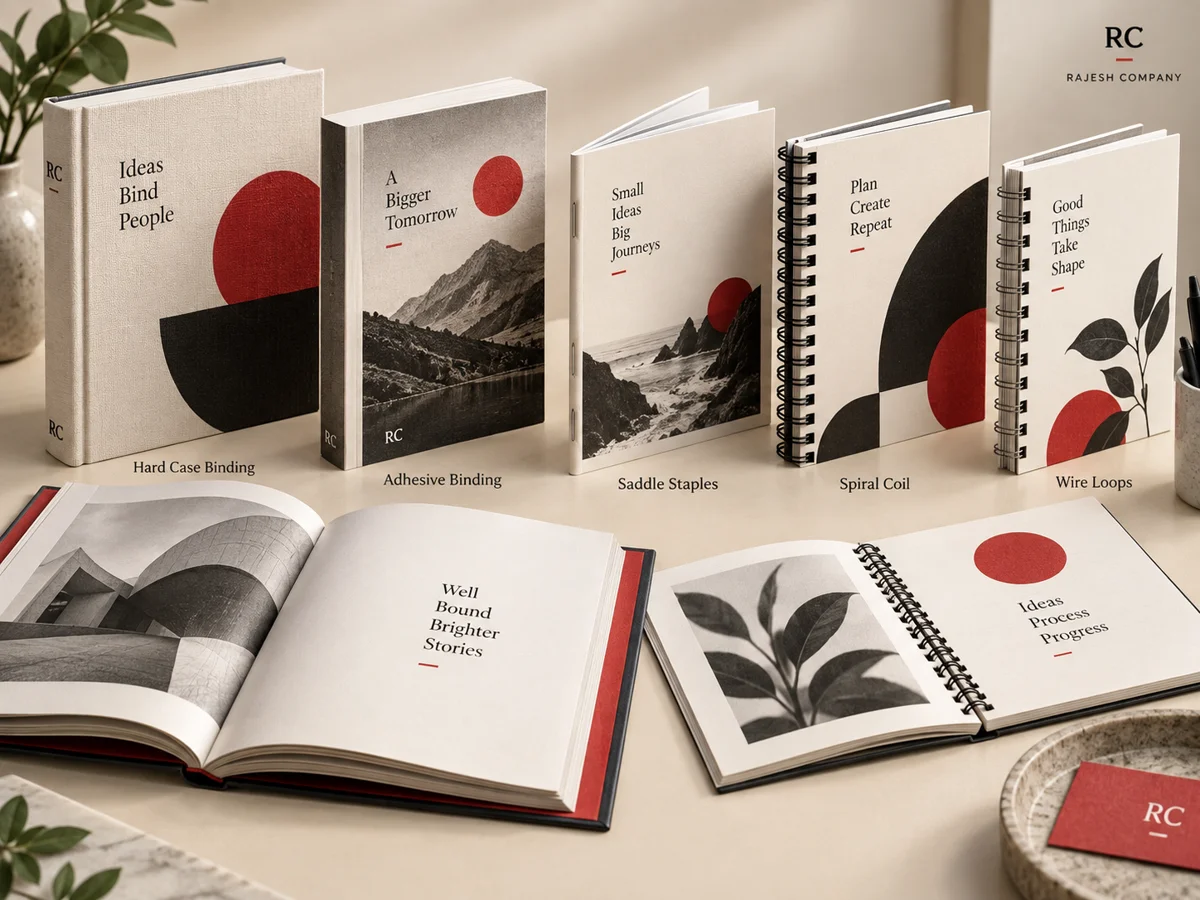
Case binding uses a hard cover. Perfect and PUR binding join pages along the spine with adhesive. Saddle stitching secures a folded booklet with staples. Spiral and wire-O binding hold punched pages along an edge. Page count, stock and intended use help determine the construction.

Printed examples illustrating binding

Explore the techniques

A closer look at the processes and the details to prepare for your project.

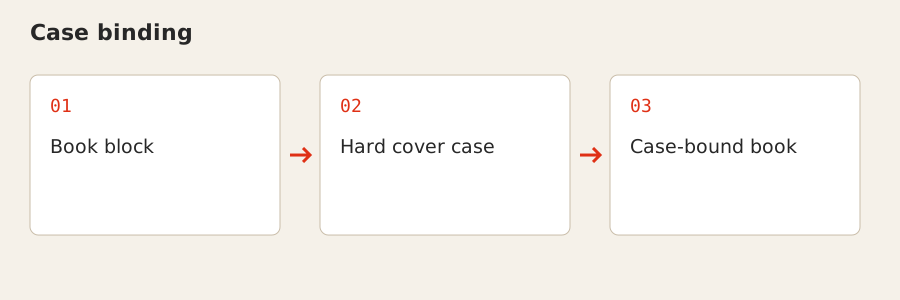
Case binding: Book block → Hard cover case → Case-bound book

Case binding

Case binding joins a book block to a separate hard cover. The cover and interior are prepared as distinct components, giving the finished book a structured exterior and a defined spine.

For your project

Suited to hardbound books, yearbooks and registers. Include final pagination, finished size, interior paper and separate cover artwork when preparing the book brief.
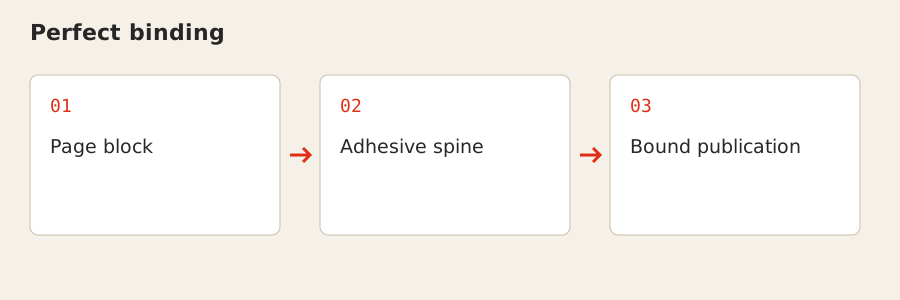
Perfect binding: Page block → Adhesive spine → Bound publication

Perfect binding

Perfect binding joins the pages along the spine with adhesive and attaches the cover around the book block. It creates a spine-based publication without exposed wire or coils.

For your project

Used for books, reports and manuals. Final pagination, paper and cover choice need to be considered together because they affect the book block and cover layout.

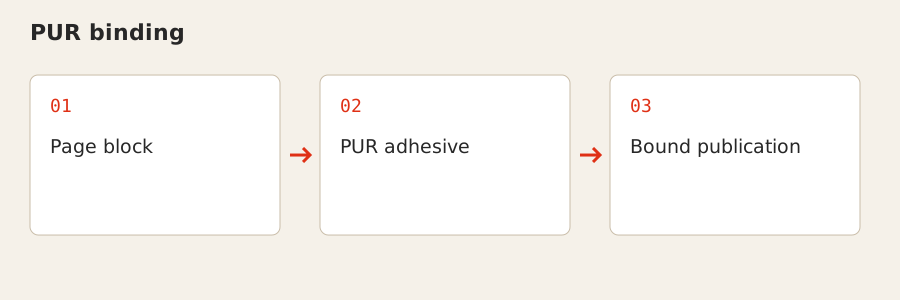
PUR binding: Page block → PUR adhesive → Bound publication

PUR binding

PUR binding is an adhesive binding process using polyurethane reactive adhesive. It is a distinct option within spine-bound publication work and should be discussed against the paper and intended handling.

For your project

Share the final book construction and paper choice when comparing PUR with other binding routes. It should be selected for the actual publication rather than assumed to suit every document.

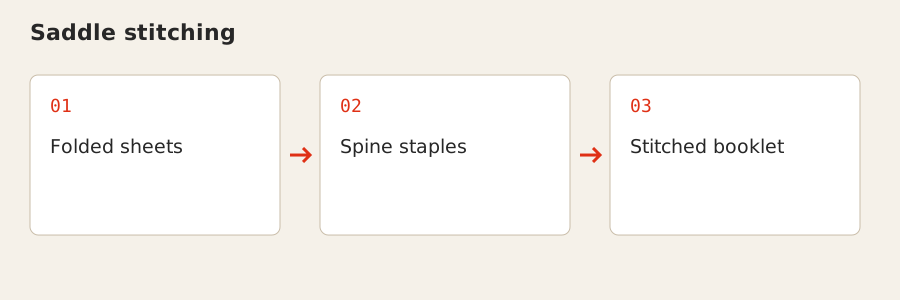
Saddle stitching: Folded sheets → Spine staples → Stitched booklet

Saddle stitching

Saddle stitching secures folded sheets with staples through the fold. The fold becomes the booklet spine, so the page arrangement needs to follow the finished reading sequence.

For your project

Suited to booklets and shorter publications. Prepare the final pagination and check page order before approval; folded construction is different from assembling loose sheets in a coil.

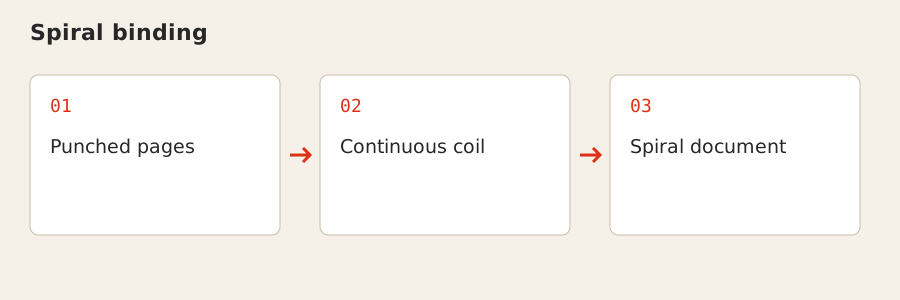
Spiral binding: Punched pages → Continuous coil → Spiral document

Spiral binding

Spiral binding uses a continuous coil through holes along the bound edge. The page block and covers are punched so the coil can hold them together.

For your project

Useful for working manuals and documents that are handled while reading or writing. State the bound edge, final page count and cover requirements in the brief.

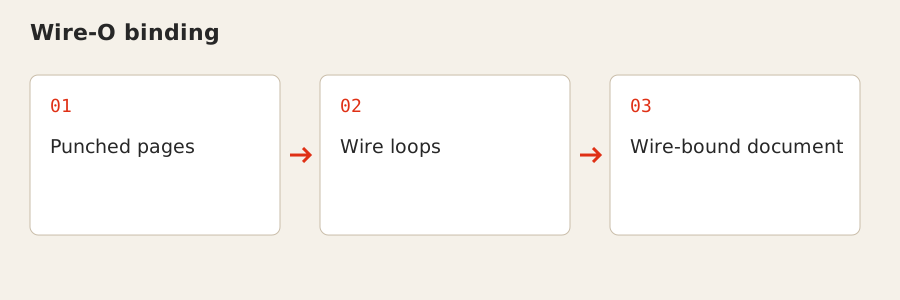
Wire-O binding: Punched pages → Wire loops → Wire-bound document

Wire-O binding

Wire-O uses a sequence of wire loops along a punched edge. It is visually different from a continuous spiral coil and forms another option for working documents and calendars.

For your project

Include the document orientation, page count and cover choice when discussing wire-O. Make sure content near the bound edge leaves room for the punched area.

Where it fits

  • Books, yearbooks and annual reports
  • Training manuals and research publications
  • Registers and working documents
Explore related products →

Start with your project

Share your artwork or reference, finished dimensions, quantity and intended use. Include your delivery location and required date.